I have dropped the domain historiesmysteriesandstrangeness.com and reverted back to the original domain of histmyst.blogspot.com. However, you will also be able to reach the site via historiesmysteriesandstrangeness.guvna.net or just simply hms.guvna.net.
Showing posts with label history. Show all posts

Saturday, May 24, 2014

This is why we need an open mind about our prehistoric history

The recent discovery of sauropod dinosaur fossils in South America were found not only in a location they were not expected to be found in, but from a time period they were not expected to be found in.  The evidence suggests the Leinkupal laticauda lived millions of years after it was thought to have gone extinct.


While this dinosaur still lived long before the time the last dinosaurs are typically said to have died off 65 million years ago, it's still proof that new discoveries can rewrite the history books.

But what about the history of human civilization?  We're basically taught that the first humans were hunter-gatherers and that they lived that way for much of history until some started to settle down as farmers.  And it was still a while after that before humans began engineering large cities.  I remember being taught about the "cradle of civilization" in the fertile crescent of the middle east when I was young.  It was said that was when writing first began, and history could be recorded.  That goes back over 6000 years.

But is the "cradle of civilization" really the cradle of civilization?  There is evidence that civilization existed long before the time of the first recorded civilizations in the middle east.  One of the best examples is Gobekli Tepe.

The site of Gobekli Tepe was discovered in 1963 but was not excavated until that 1990's.  Massive stone monuments with elaborate carvings of animals have been found at the site and dated to being at least 10,000 years old.

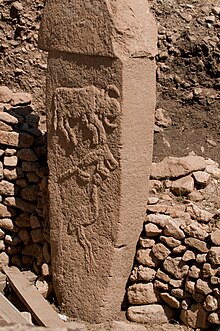

There is no written record of what the purpose of the site was, who built the site, or how they built the site.  But it was obviously built by skilled engineers and at some point appears to have been deliberately buried thousands of years before the rise of civilization in the fertile crescent.  It is thought only a small percentage of the site has even been excavated, but what they have found so far is proof enough that civilization existed thousands of years before the earliest recorded civilizations in the fertile crescent.


In 2001, it was announced the ruins of an ancient city were found underwater in the Gulf of Khambat in India.  The civilization found there was dated to being 9500 years old.  Whoever built the city obviously built it when the land it is own was above ground.  It is my feeling that there could be many civilizations that existed thousands of years ago prior to the Great Flood (or the end of the ice age) that are now underwater.  The ruins in Gulf of Khambat are just one example.  I elaborate more on my thoughts about lost civilizations and underwater archaeology here.

My feeling is that we need to be more open minded about our prehistoric history.  These are but two examples of prehistoric ingenuity (see more here).  While I am not a dogmatic creationist who believes the world is only 6000 years old, I also do not simply accept "scientific" dogmas about prehistory as fact.  I'm comfortable with my worldview being viscous and shaped by what is discovered instead of just being set in stone.  I don't try to make new discoveries fit into some long held beliefs.  If a new discovery fits with what is known historically, great.  But if it doesn't, then maybe it is time to rethink that part of history.  If a new discovery can rewrite when a dinosaur lived, then new discoveries should be able to rewrite how old civilization is.  And the discoveries at Gobekli Tepe and the Gulf of Khambat are evidence that human civilization existed thousands of years prior to the records of civilization that we have.

Thursday, April 24, 2014

Why did we start eating meat?

That's been the question on my mind today.  I am a meat eater, although sometimes I do eat a meatless meal.  But I'm wondering why humans ever started eating meat in the first place?  Or have humans always eaten meat?

It's kind of a difficult question.  This article gives opposing views.  One side points out how humans are more similar to herbivores than carnivores (ex. herbivores have longer intestinal tracts than carnivores, and human intestinal tracts are closer in length to herbivores), but the other side points out  reasons that indicate humans are omnivores (ex. the stomach's production of hydrochloric acid, which isn't found in herbivores).

So were humans always omnivores?  Some of the ancient Greeks believed there was once a Golden Age where humans were non-violent and there was no hunting or livestock breeding.  I don't think there would have been any meat eating in the Garden of Eden in the Bible either.  So perhaps there was a time when humans didn't eat meat?  According to this article, "hominins" (early humans) have been eating meat for 2.6 million years.  That's a pretty long time, but it sort of leaves open the possibility that "hominins" living before that time may have been herbivores.

According to this National Geographic article, eating meat triggered a genetic change in humans that enabled a better processing of fats.  The great apes, for example, cannot handle high fat diets like humans can.  Crooked teeth is also blamed on eating meat.  Apparently our jaws have gotten smaller and supposedly our teeth are too big for our jaws now which is why people end up with crooked teeth (and oftentimes have their wisdom teeth removed).

But I'm not really questioning whether or not humans should or shouldn't eat meat now.  I'm just wondering why humans ever started eating it in the first place?  The Nat Geo article linked above suggests hominins may have started eating meat for ecological reasons -- competition from other species, perhaps.  I guess it's possible, but is it also possible that they just observed carnivores doing it and decided to try it for themselves?  Is there any chance it could have been for religious purposes?

Throughout recorded history, there are records of animals being sacrificed to the gods (or God, in the case of ancient Judaism).  The supposed purpose of the sacrifice was to win favor or make amends with the gods.  But the meat would still be eaten.  So an animal sacrifice was basically like a big barbecue or pig pickin'.  Some might say that very early hominins probably wouldn't have had any religion.  Maybe not, but there is plenty of evidence for prehistoric sophistication, so who knows?  But I doubt humans started eating meat for religious purposes anyway.  I think it is more likely that early accounts of animal sacrifices to the "gods" were an excuse for the priestly class to have free meat brought to them.

So there may not be a definite answer as to why hominins started eating meat.  Competition for food is one possibility.  Sheer curiosity as to what it might taste like is another possibility.  But maybe the bigger question here is where did carnivores come from?  What was the first species to become an aggressive predator?  Why did that species feel the need to hunt down another species and eat it?  From a symbiotic point of view, I could see where there may be a need for scavenging carnivores -- plants get energy from the sun, herbivores get energy from the plants, and carnivores get energy from the herbivores.  A scavenging carnivore could eat other dead animals, so from a symbiotic perspective, they could be cleaning up the dead carcasses they come across.  But is there really a need for predatory hunter in that symbiosis?  What is that need?  Is it to stop overpopulation?  If so, what came first, the predator or the overpopulation?  And who got to decide what "overpopulation" was for a certain species?  Did overpopulation of a certain species really exist?  Or could it be that herbivores who were victims of predators only started to reproduce more often because the predators limited their numbers?  In other words, did overpopulation lead to predatory animals or did predatory animals lead to an increased rate of reproduction in other species?  Was there ever a time where there was a symbiosis of life on earth that didn't include predators?  Did that non-violent golden age the Greeks spoke of ever really happen?

I may be a meat eater, but I like the idea of getting back to a non-violent golden age.  And I guess that is what this post was really all about.


Wednesday, February 26, 2014

Random Facts of History 5

1.  In Pascagoula, Mississippi in 1942, a phantom barber broke into several people's homes and cut their hair while they were sleeping. (Source) (via)

2. Benjamin Franklin served on the committee that drafted the Declaration of Independence, but it has been said he was not to chosen to draft the document for fear that he may conceal a joke in it. (Source)

3. Henry V of England was the first English king to speak English as a primary language. (Source)

4. There is a Greek legend that says Zeus sent a flood to destroy humanity, but Deucalion, son of Prometheus, built an ark to ride the flood out.  Afterwards, he and his wife repopulated the earth. (Source)

5.  Back in the 1990's during a massive power outage in Southern California, some Los Angeles residents called 911 to report mysterious lights in the sky.  The lights were the Milky Way, which they weren't used to seeing because of all the Los Angeles lights. (Source)

6.  It is said Napoleon entered the Great Pyramid and then came out pale and shaking.  He refused to speak about it, but hinted that he had seen a vision of his future. (Source)

7. In 1625, an English invasion of Spain was called off because the soldiers stopped in village in the wine producing region of Andalusia and got to drunk to carry on. (Source)

8. Archduke Francis Ferdinand was wearing a bulletproof vest when visiting Sarajevo in 1914.  It did him no good since he was shot in the neck though. (Source)

9.  Telling ghost stories at Christmas was a Victorian era tradition (hence the verse from Andy William's "The Most Wonderful Time of the Year" about telling scary ghost stories). The tradition has mostly faded away now, except for Charles Dicken's classic tale A Christmas Carol. (Source)

10. Swiss-born watchmaker Pierre Jaquet-Droz built a robotic boy capable of writing in the 1700's. (Source)

Saturday, January 11, 2014

The Dark Skies of 536 AD

The fifth angel sounded his trumpet, and I saw a star that had fallen from the sky to the earth. The star was given the key to the shaft of the Abyss.  When he opened the Abyss, smoke rose from it like the smoke from a gigantic furnace. The sun and sky were darkened by the smoke from the Abyss.  -Revelation 9:1-2

I find Biblical prophecy fascinating.  I think it is remarkably accurate from a historic perspective.  There are different views on how to interpret Biblical prophecies though.  I'm not sure what the statistics are on how many people adhere to one or the other viewpoints, but I think the futurist view is probably the most popular and well known.  Simply put, the futurists view many Biblical prophecies as events that have not yet happened.  This type of view is what the popular Left Behind book series is based on.  It's a very faith based view point, and at one point in time, it was the viewpoint I took.

But there are a couple of other interpretations too.  Preterists view Biblical prophecies as historical events that already happened a long time ago around the time the books were written.  Historicists, on the other hand, view the prophecies as events that have occurred throughout history.  As a history buff, I've come to realize the futurist view just doesn't seem accurate anymore.

For instance, many futurists are expecting a new pagan temple to be built on the site of Temple Mount in Jerusalem with a statue of the anti-christ in it.  But it's known that Emperor Hadrian already built a pagan temple to Jupiter on the site of Temple Mount back in the 2nd century.  It's a prophecy that has already been fulfilled.

So it seems the futurist view may not be all that accurate.  History has taught me the other two views have more merit.  And although I think the preterists have made some good arguments for their case, it's the historicist view that I find most accurate.  The prophecy at the beginning of this post is one of the reasons why.

In the year 536 AD, a dry fog or veil of dust darkened the skies of Europe and Asia minor for around 12 to 18 months.  This event brought decreased temperatures, drought, and food shortages.  Contemporary reports indicate the effects of the event extended to Africa, Mesopotamia, and China.

It's not certain what caused the persistent fog or dust, but it's speculated it was the result of either a volcanic eruption or cometary impact (or even a near miss by a comet).  In the prophecy above, it almost sounds as if both of those events could have happened.  The star falling from the sky could have been a comet and the abyss smoking like a furnace could have been a volcanic eruption.  Could both of those events have happened around the same time?  I'm not sure what the odds are, but I think it's certainly possible.  They could have been separate, unrelated events, or it could be that the cometary impact set in motion a chain reaction under the earth that cause a volcano to erupt.  I think it's also possible that the impact alone could have achieved the description of the prophecy.  The impact could have created an "abyss" and fires could have occurred that caused the smoke.  Regardless of the cause though, reports indicate the skies were darkened for at least a year in 536 AD.

I only recently heard about this historic event.  But in my mind, this is just another example of why I consider the historicist interpretation of Biblical prophecy to be the most accurate.  The event doesn't fit with the preterist view because it happened long after the Bible was written, but it has already happened, so it's not a future event either.

Monday, December 23, 2013

A Brief History of Santa Claus

The holiday figure known as Santa Claus nowadays has his origins in the ancient past. The traditions and appearance associated with the modern Santa Claus consists of an amalgam of Christian traditions and pagan Germanic traditions.  Modern traditions and depictions of him are also inspired by Clement Clarke Moore’s popular poem “A Visit from Saint Nicholas” (“‘Twas the night before Christmas”) and songs like “Santa Claus is Coming to Town.” The images below are historical depictions of him and his predecessors.

Saint Nicholas
Saint Nicholas was a 4th century bishop in the town of Myra in what is now modern Turkey. He is known for secretly leaving gold in people’s shoes. In one case, a poor man had three daughters he couldn’t marry off so he was going to sell them into prostitution. Saint Nicholas left a bag of gold for him so he would have a dowry and could marry off his first daughter. Saint Nicholas did the same for his second daughter, but when it was time to marry the third daughter, the man waited up to see who his benefactor was, but Saint Nicholas dropped the gold down the chimney instead. (Image source)

Odin

Odin was a Norse god who was worshiped by Germanic peoples prior to Christian times. After the Germanic peoples converted to Christianity, some of the old Norse traditions from the Yule celebration were absorbed into Christianity.  Odin was known for having a long white beard and riding at night on an 8-legged horse called Sleipnir. (Image source)

Sinterklaas

Sinterklaas is a Dutch version of Saint Nicholas and dresses in a manner resembling a religious authority such as a Bishop or Cardinal. He is the gift bringer at Christmas in various European countries. (Image Source)

Father Christmas

Father Christmas is an older British version of Santa Claus. (Image source)

Santa Claus as depicted by Thomas Nast in the 1800's.

Thomas Nast is usually credited with designing the modern image of Santa Claus in his various portrayals of him in Harper’s Weekly during the 1800’s. (Image source)


Santa Claus in Coca-Cola ads

Coca-Cola has been credited with popularizing the image of Santa wearing red in their advertisements, but they did not invent the idea of Santa wearing red. Earlier depictions of Santa had him wearing various colors, including red. (Image source)

Sources: 1, 2, 3, 4
(via)


Saturday, October 26, 2013

A UFO Battle over Nuremberg or an Atmospheric Phenomenon?

The city of Nuremberg was founded in Medieval times and was once a meeting place of the Imperial Diets (Reichstag) and courts during the time of the Holy Roman Empire.  It's more recently been known as the site where the Nazis held huge conventions known as the Nuremberg rallies.  After the Nazis lost World War II, the city was where Nazi war criminals were brought before an international tribunal to be judged for their crimes.

But Nuremberg is also a city that reportedly had a UFO battle over it on April 4, 1561.  The woodcut below is a report of the battle, complete with an illustration by Hans Glaser.


The "battle" was a mass sighting, reportedly lasting around an hour.  Residents reported seeing cylindrical objects from which red, black, orange, and blue-white disks and globes emerged.  Crosses and tubes were also seen.  Even today, people report seeing "cigar" shaped UFOs and flying saucers (or discs).  A cross shaped object could even be a description of what a modern airplane looks like.  The picture above also depicts a spear shaped object that could almost pass as a silhouette of a Star Destroyer from Star Wars.  So could there have really been a UFO battle over Nuremberg in 1561?

Some skeptics have suggested the event was a hoax, but that's unlikely since there were multiple witnesses.  Others have suggested it was a mass hallucination brought on by ergotism.  While that might not be impossible explanation, I think it's probably unlikely as well.  I find the mass hallucination explanation is typical of a skeptic who doesn't have a better explanation for something, so I don't put a lot of stock in it.

The website ancientaliensdebunked.com explains the "battle" away as nothing more than an atmospheric phenomena known as a "sundog" (also known as a parhelion).  Sundogs are commonly made by the refraction of light from plate-shaped hexagonal ice crystals in high and cold cirrus clouds.


In the above image, you can actually see a resemblance between the phenomena and the artwork (but note that the artwork depicted is not from the illustration of the event depicted in the image near the top of the page, but of something else).

I looked over other images and videos in the debunking article linked above, and, if you accept that Glaser took some artistic licensing in depicting the event (I mean, he did draw a face on the sun, so he must have taken some artistic licensing), it could be a plausible explanation.  But what about the objects that crashed?  It was reported that the objects fell to the ground producing a lot of steam (or a big smoke).  Can atmospheric phenomena fall to the ground?  No, not really, but it might look like it's falling to the ground.  Despite the "objects" reportedly falling to the ground, there are not reports of anyone finding any crashed objects.  It's possible they observed another atmospheric phenomena known as "fall streaks."  Like sun dogs, fall streaks are also made with ice crystals.

Fall Streak
In the image above, you see a fall streak that appears to be black and somewhat triangular in shape...could it be an explanation for what the spear shaped object depicted in the top image is?

My guess is atmospheric or celestial phenomena is the most likely explanation for the event.  Although the description of the "objects" could match the description of some modern day UFO sightings, how often do people report space battles of UFOs that last for an hour?  I'm not aware of any, and if there were any today, you'd think someone would have video footage of it.  If people witnessed multiple UFOs crashing, you'd think someone would have probably found them and documented them.  So I think it's more likely the "objects" were not objects at all, but atmospheric phenomena.  The witnesses probably reported what they thought they were seeing because they weren't sure of what they were really seeing.  And Glaser, who illustrated the event, didn't actually witness the event himself; he was only going by what someone else reported to him.

If only we had video footage of the event.  Even if it wasn't a UFO battle, it sounds like it was a pretty awesome sight to see.

Sources: 1, 2, 3, 4, 5

Monday, September 30, 2013

The Ghost Blimp of World War II


On August 16, 1942 at 6:03 AM, the US Navy Blimp L-8 lifted off from Treasure Island in San Francisco Bay with its two man crew consisting of Lieutenant Ernest Dewitt Cody and Ensign Charles Adams.  It was Adam's first time piloting a blimp, but Cody had experience and had flown the L-8 before in a mission crucial to the success of the Doolittle raid in Japan.  The mission Cody and Adams were on August 16 was to look for Japanese submarines.

A little over an hour and a half into the mission at 7:42 AM, Cody radioed to base that they had spotted an oil slick and were going to investigate.  That would be the last transmission from the crew.

At 11:15 AM, the L-8 was seen returning from sea by beach goers.  Caddies at the Lake Merced Golf and Country Club observed the blimp disappear behind two hills and then rise again after a brief snag on a cliff.  It drifted for a while longer after that and eventually crashed in Daly City in a residential area.

William Morris, a volunteer firefighter who lived in the house in front of where the L-8 crashed, was the first person on the scene.  He assumed the crew would still be inside the cabin and rushed to help them, but as he approached, he noticed the doors were open and no one was inside.  A team of salvagers from the Navy arrived within an hour of the crash and found that two of the three life jackets were missing (which would follow regulations that the crew wear lifejackets), but the parachutes and the life raft were still in place and the radio was still operational.  One of the crew member's caps was found on the controls and a locked briefcase with secret codes was found in place.  The engines were still switched on, but there was no fuel left to power them.  Aside from rips in the dirigible's fabric from tearing across roofs in Daly City, the helium gas valves were still set as they should be and it was determined the dirigible was still airworthy.

The coastline and sea was immediately searched for the crew, but they were never found.  They searched the entire ground area that the L-8 had covered and found no trace of the men and determined that they must not have been on board at any point when the blimp traveled over land.

A later investigation determined that two fishing vessels in the area of the observed oil slick witnessed the L-8 descend to about 300 feet and circle the slick and then rise skyward again.  The fishing crews didn't witness anything fall or drop from the ship.  The L-8's crew were declared missing and pronounced dead a year later.  The L-8 was repaired and used as a training vessel after that.  Goodyear used the blimp after the war and it was retired in 1982.  Goodyear donated the control car the National Museum of Naval History in 2003.

So what happened to the crew?  Were they captured by the Japanese?  Did they go AWOL?  Did UFOS abduct them?  Most likely, it's none of those scenarios.  Despite the fishing crews seeing nothing fall from the blimp, the most probable scenario is they crew just fell out at some point.  The safety bar on the door of the control car was missing, indicating they either opened the door or the door opened accidentally.  If so, they must have fallen out of the blimp at some point over the ocean and were just never seen again.

Sources: 1, 2, 3

Thursday, September 5, 2013

The Sea Serpent of Nantucket

In August of 1937, Gilbert Manter reported seeing a sea monster 120 feet long in the waters off of Nantucket, Massachusetts.  There was a subsequent sighting and footprints were even discovered on the beach.


Eventually, the monster showed itself and was even photographed!


As it turns out though, the sightings and footprints had been part of a hoax --more like a practical joke or publicity stunt-- orchestrated by Tony Sarg and some other local residents.  Tony Sarg was a children's book illustrator who also designed animated window displays for Macy's Department Store in New York.  He also created the first hot air balloons for Macy's Thanksgiving Day Parade -- a skill that came in handy when he orchestrated the sea serpent hoax.

The hoax didn't last long though.  The "monster" was eventually inflated on Coatue and could be seen from the harbor, and the following day it was inflated on the South Shore where it was visited by many residents.


It seems this hoax was just all in good fun.

See video footage of the event below.  See more photos here.


Source 1
Source 2
Source 3
H/T

Sunday, September 1, 2013

Random Facts from History 3

1.  James K. Polk, the 11th President of the United States, had a Chinese character tattoo.  He was told it meant "eager." (Source)

2.  In 1939, the New York Times predicted that Television would fail because people wouldn't have time for it. (Source)

3.  There are more than 700 underground tunnels in Bavaria of unknown origin and purpose.  There are no historical records of them, but it is thought they probably date back to Medieval times. (Source)

4.  Braxton Bragg, a 19th century U.S. Army officer and Confederate General, was known to have denied his on request on one occasion and then argued with himself about it.  While simultaneously serving as company commander and company quartermaster, he sent a request (as company commander) to the company quartermaster (himself), and then  as quartermaster, he denied the request and gave an official reason for doing so in writing.  As company commander, he replied back claiming he was justly entitled to what he requested.  As quartermaster, he stubbornly continued to refuse the request.  Ultimately, Bragg requested the post commander intervene. The post commander responded by saying, "My God, Mr. Bragg, you have quarreled with every officer in the army, and now you are quarreling with yourself." (Source)

5.  The oldest known living individual clonal tree in Norway is called Old Tjikko and is said to be 9550 years old. (Source)

6.  The Grand Mosque of Paris helped some Jews escape Nazi persecution in the 1940's by issuing them Muslim identity papers. (Source)

7.  In 18th century England, men who dressed and spoked outlandishly in an epicene manner were referred to as "Macaronis."  The term came from men who belonged to a non-formal club called the "Macaroni Club" and referred to anything they considered fashionable as "macaroni."  This is where the famous line from "Yankee Doodle" about sticking a feather in his hat and calling it macaroni came from. (Source)

8. During World War II, German military tanks would run over camel dung for good luck.  The Allies caught on to this and began placing land mines in camel dung.  When the Germans caught on to that tactic, they began to avoid fresh piles of camel dung.  In turn, the Allies began placing land mines in camel dung that looked like it had already been run over. (Source)

9. Julius Caesar was once captured by pirates who he threatened to punished when he was freed.  His ransom was paid and he later returned with a Roman fleet and captured all of his ex-captors and crucified them. (Source)

10. In 1959, mail was packed into a missile and launched from the submarine USS Barbero.  It reached it's intended target in Mayport, Florida in 22 minutes.  Despite the success, they apparently decided against making rocket mail delivery a regular service. (Source)

Sunday, July 21, 2013

The First UFO Photo

A lot of the "early" UFO photos that we're familiar with come from the mid 1900's.  However, the earliest known photo of a UFO actually dates back to the 1800's.

The image below was shot at Mount Washington, New Hampshire in 1870 or 1871 (although some sources have dated it to 1880 or as late as 1896).  As you can see, there's a picture of what appears to be cloud formation...with what appears to be a cigar shaped UFO flying in front of it!


Here is a zoomed in image of the UFO.


So what is it?  Airships already existed by 1870, but they weren't common until the 1900s.  Could it be an image artifact?  Or could it be something even more mundane?  The list below is supposedly a list of pictures that includes this particular picture (it's suggested that number 17 is the picture above).


Nowhere on the list is a UFO mentioned though.  You would think the photographers would have noted that if they saw a UFO...even if they didn't see it until after the photo was developed.  It's also been said that the image is actually a bit of an illusion, not a distant image of a cloud but a close up image of a frost formation.  So what is it really? Who knows for sure.  There's a lot of recent UFO photographs that have debatable authenticity.  This is just the earliest photo of debatable authenticity.

Saturday, July 13, 2013

Random Facts from History 2

-Benjamin Franklin wrote an essay about flatulence titled, "Fart Proudly." (Source)

-The first message sent over the internet  in 1969 was "LO."  They were attempting to type "LOGIN" but the system crashed while processing all the information. (Source)

-Greek statues were originally painted, but their colors faded over time. (Source)

-Pirates wore eyepatches to have one eye adjusted for the top deck and one eye adjusted for the darkness below deck. (Source)

-Adolph Hitler was Time Magazine's Man of the year in 1938 and was nominated for a Nobel Peace Prize in 1939 (though it's said the nomination was supposed to be satirical).  (Source 1) (Source 2)

-Teddy Roosevelt is the only person to ever receive a Nobel Peace Prize and a Congressional Medal of Honor, the two highest awards for war and peace. (Source)

-The Statue of Liberty was originally intended for Egypt. (Source)

-Thomas Jefferson invented the swivel chair. (Source)

-The Eiffel Tower was originally going to be demolished in 1909, but was saved because the antenna added to it could be used for communications. (Source)

-There was a shopping mall in ancient Rome that was 4 stories tall with 150 shops and offices.

Wednesday, July 10, 2013

Ghost Towns Of America

A short video Buzzfeed posted recently about Ghost Towns in America.  Some eerie looking places in the video!

Thursday, June 6, 2013

Treasure in Great Pyramid Awaits Discovery says Zahi Hawass

A news article came out today that says famed Egyptologist Zahi Hawass is free of legal charges and is launching a worldwide lecture tour hoping to boost tourism in Egypt.  He's apparently making a pretty big claim too -- he says the Great Pyramid may still have undiscovered treasure.

Hawass also said that he believes there are some fantastic discoveries waiting to be made, including more tombs in the Valley of the Kings and a secret burial chamber, containing treasure, which he believes to be inside the Great Pyramid built by the pharaoh Khufu (also known as Cheops).
How awesome would it be to find hidden treasure in the Great Pyramid?  Maybe even the real burial chamber?  I've heard people claim a lot of different things about the Great Pyramid including hidden chambers, but until now, I don't know if I've ever heard Zahi Hawass make such a bold declaration.  Sure, he's the one behind the robot investigation of the two mysterious shafts in the Queen's chamber, but those investigations, while interesting, have been inconclusive.  So where do the hidden treasure claims come from?  Well, the article quotes Zahi has saying this: 

"I'm traveling the whole world. I'm going to Brazil, going to Argentina at the end of the month, going to Australia, New Zealand, everywhere to promote tourism to Egypt and to bring the tourists back because, I think, I'm the only one who can really bring the tourists back to Egypt," he told LiveScience.
Hmm...tourism.  The article goes on to say this:

Tourism plummeted after Egypt's revolution, resulting in lower ticket sales at ancient sites, a situation that has the antiquities ministry strapped for cash.  
"We don't have any money at all for excavation or preservation," he told the audience.
Hmm...and they're short on cash.  Could this just be a marketing ploy to increase tourism and funds coming into the country?

I'd like to think there is hidden treasure in Great Pyramid.  The idea that there is hidden treasure waiting to be discovered is not a new idea.  But I can't help but wonder if Zahi Hawass is only now hyping it in an attempt to increase tourism.


Wednesday, June 5, 2013

The White Indians of Panama

I came across a scanned page from a book titled Blond Indians of the Darien Jungle on a blog today.


The blogger didn't know if it was legit or an elaborate hoax though, so I decided to look up more about it.  I came across this blog posting that had more information, apparently using the book mentioned above as the primary source.  Here is an excerpt from it:


When Mr. Marsh began his search he did in fact use two army planes in the process, unfortunately they had only one flight. Upon their return the new Army General in the Canal Zone refused further usage of his planes for such a worthless and dangerous venture.
Up until this time Mr. Marsh was a pure skeptic, he had heard the rumors of White Indians, of course but gave them the same validity as the rumors of a Man-Ape beast in the jungle as well. Eventually he charters a boat and his team travels up the inner river to the town of Yavisa, which consisted of only 50 ramshackle bamboo huts. While he was talking to the head man of Yavisa Mr. Marsh had his paradigm change before his eyes. "Across the narrow clearing were walking three young girls, perhaps fourteen to sixteen years old. They wore nothing but small loin-clothes. And their almost bare bodies were as White as any Scandinavian's. Their hair, falling loosely over their shoulders, was bright gold! Quickly and gracefully they crossed the open space and disappeared into the jungle. I turned to the negro headman in amazement. White Indians! The one tale of Latin America in which no respectable explorer dare to believe! The headman did not seem to to consider the sight unusual. "They come from a tribe which lives in the mountains up the Chucunaque," he said in explanation. "Before this they haven't come so far down the valley. But a little time ago they built a house above our village, and families of them come down to trade with us. Some are white, Some are dark like other Indians."
"Take me to their house," I asked. The negro shook his head with great decision. "No. They would kill me," he said. "They will kill any black man if he goes near their house. But perhaps they will not kill you. You are white. Just follow the trail the girls took."
The blog posting goes on to describe the rest of Mr. Marsh's exploration and subsequent return with scientists and notes that the book indicates that black and white explorers in the area had treated the natives poorly in the past, thus the poor history between them.  Click here if you want to read more.  It also goes into some interesting stuff about hidden modern Mayan cities.

I don't think it is an elaborate hoax.  The Smithsonian has pictures of the Marsh-Darien Expedition here, so it obviously really happened.


I think the bigger question here is are the "white indians" white because of a genetic mutation or because they have European ancestry?  Interestingly, the linguists researching their language indicated the language of the "white indians" was Sanscrit or Aryan in structure, and they discovered over 60 words that were identical with early Norse.  With that information in mind, it would seem there is a strong possibility that there was a Norse presence in Pre-Columbian Panama.  I guess the next questions to ask would be how did they get there and why did they go?  Those questions are harder to answer though.

This isn't the first I've heard of blond haired natives though.  I actually wrote a short post about a video mentioning blond haired people living on different continents around the world back in 2009.

Saturday, May 11, 2013

Random Facts from History

I may make this Random Facts from History a series, but I'm not sure yet.  It definitely won't be a weekly series though.


- The famous "I Love NY" logo was created by Milton Glaser for free.  He expected the ad campaign to only last a couple of months, but it has since become a recognized symbol of New York City.  The torn envelope with his original doodle on it now resides in the Museum of Modern Art in New York. (Read more.)


- Honey does not rot or spoil if stored properly.  A jar of honey can remain edible for 1000s of years. (Read more. Also this.)

- William Franklin, son of of American patriot Benjamin Franklin, remained loyal to the British crown throughout the American Revolutionary War.  He and his father never reconciled. (Read more.)

- In the 1960s, the CIA created a cyborg cat that it intended to use as a spy in an operation known as Acoustic Kitty.  Unfortunately, the cat was not very trainable and after being driven to a park to listen in on a conversation between two men as a test, the cat instead wandered into the street and was killed by a taxi.  The project was abandoned after that. (Read more.)

-Famed 19th century wild west show performer Annie Oakley was falsely reported to have been arrested for cocaine use in 1903.  Her "highest ambition" was "to be considered a lady," so she filed 55 lawsuits against newspapers that had libeled her.  She won or settled 54 or the 55 lawsuits. (Read more.)

-The Dutch East India Company is considered to be the most valuable company in history.  In 1637, the company was valued at 78 million Dutch Guilders, which when adjusted to 2012 dollars would be 7.4 trillion dollars.  The company was in business from 1602 to 1800. (Read more.)

-Nineteenth century Texas politician and cattle rancher Samuel A. Maverick refused to brand his cattle and, ironically, his own surname became a term for independent people who refuse to follow the precepts of social order.  (Read more.)

-US President Lyndon Johnson owned an amphibious car known as the Amphicar and enjoyed surprising unsuspecting guests when taking them for a ride in it. (Read more.)


-Spiked dog collars were invented in ancient Greece to protect dogs throats from attacks by wolves. (Read more.)

-The act of performing a "toast" to the health of friends was started in ancient Greece when a host would pour wine from a common pitcher and drink it before his guests, who, when satisfied it was good, would raise his glass to his friends to do likewise.  This showed that the wine was not poisoned.  The Romans later adapted the custom and would also drop a piece of burnt bread into the wine, hence the term "toast." (Read more.)


Friday, May 3, 2013

Building a History

A collection of images of famous places and monuments being built.

Gateway Arch, St. Louis, MO -1965

Times Square, New York - 1903


Tower Bridge, London - 1892

Washington Monument, Washington - 1860

Woolworth's Building, New York -1912

Chrysler Building, New York - 1930

Spaceship Earth, Disney World - 1980

Eiffel Tower, Paris - 1878
All images via Half-Built History.

Monday, April 29, 2013

The Strange History Of Everyday Greetings And Phrases

Came across this short little video about the origin of some everyday greetings like "hello."


Friday, April 5, 2013

Vintage UFO Sightings chart

I came across this UFO sightings chart from the 60's in the UK National Archives Flickr.


I thought it had some interesting designs and interesting that they had it and posted it!

I also saw this artwork sent to the Air Ministry depicting a UFO sighting experienced by a member of the public.


Check out more photos on The National Archives UK Flickr page.

Tuesday, March 19, 2013

The Forgotten Hover Car

Update (04/26/14): The car depicted below was a mystery to me when I first saw the pictures of it so I tried to find some information about it.  There was very little information about it at the time, so I just wrote about what I could find.  New information has come to light though, that indicates the car wasn't made by Ford in 1961, but by Curtis-Wright in 1959.  I'm not changing the article, but I've included updated information about it at the end of the article.

Have you ever wondered if a wheel-less vehicle that hovers over the ground would ever be invented?  A car like something from the Jetsons or a landspeeder from Star Wars?

Little did I know, something like that already existed.  Who knew we could look to the past to find something we thought would might come in the future?  I came across something today called the Glideair hovercar made by Ford all the way back in 1961.


I saw these images at Retronaut.com, which labeled the car as being from 1961 (the source of the images says 1961 as well).  I came across a magazine article from 1958 that mentions the Glideair here though, but the article doesn't actually show a picture of the Glideair.  Here's an excerpt from that article:

This revolutionary new mode of travel was recently unveiled by the Ford Motor Company in the form of the Glideair—a wheel-less vehicle that rides on a thin film of air a fraction of an inch above the road.   
Says Andrew A. Kucher, Ford’s vice president in charge of Engineering and Research: “We look upon Glideair as a new form of high-speed land transportation, probably in the field of rail surface travel, for fast trips of distances of up to about 1,000 miles.”  
A gas turbine or turbojet engine would supply the power to both levitate and propel the Glideair. Instead of wheels the vehicle would employ “levapads,” a Kucher-coined word. Tiny jets of air would stream through holes in the levapads, supporting the vehicle. It is significant to note that levapads have already been designed to fit around a standard rail. They raise the vehicle from the rail and keep it away from the rail sides.
Apparently the idea didn't quite "take off" though (pun intended), because we aren't driving around in these today.  I haven't found much information on what happened to the car, but I did find this on Wikipedia about it:

One of the earliest hovertrain concepts predates hovercraft by decades; in the early 1930s Andrew Kucher, an engineer at Ford, came up with the idea of using compressed air to provide lift as a form of lubrication. This led to the Levapad concept, where compressed air was blown out of small metal disks, shaped much like a poppet valve. The Levapad required extremely flat surfaces to work on, either metal plates, or as originally intended, the very smooth concrete of a factory floor. Kucher eventually became VP in charge of the Ford Scientific Laboratory, continuing development of the Levapad concept throughout. 
It does not appear any effort was put into vehicle use until the 1950s, when several efforts used Levapad-like arrangements running on conventional rails as a way to avoid the hunting problems and provide high-speed service. A 1958 article in Modern Mechanix is one of the first popular introductions of the Levapad concept. The article focuses on cars, based on Ford's prototype "Glideair" vehicle, but quotes Kucher noting "We look upon Glideair as a new form of high-speed land transportation, probably in the field of rail surface travel, for fast trips of distances of up to about 1,000 miles".  A 1960 Popular Mechanics article notes a number of different groups proposing a hovertrain concept. 
What was lacking from all of them was a suitable way to move the vehicles forward – since the whole idea of the hovertrain concept was to eliminate any physical contact with the running surface, especially wheels, some sort of contact-less thrust would have to be provided. There were various proposals using air ducted from the lift fans, propeller, or even jet engines, but none of these could approach the efficiency of an electric motor powering a wheel.

So as cool and retro-futuristic as it looks...apparently it just wasn't as efficient as using wheels.

Update (04/26/14): According to this article, the car in the picture above is not the Glideair, which apparently didn't even exist.  However, it is not fake, and is actually the "Bee" by Curtis Wright from 1959.  So mystery solved!

Wednesday, March 13, 2013

Worlds within the World


In addition to the many subway systems in large cities around the world, there are also man-made underground cities, such as Crystal City, Virginia and  Underground Atlanta that are hubs of retail commerce.


Underground Atlanta

Crystal City, Virginia

Though tourists don't go down there, Disneyworld has it's own underground city beneath the Magic Kingdom that employees can walk through to get to the various sections of the park.


The Underground Kingdom in Disney World
Edinburgh Vaults


The History channel used to have a show called Cities of the Underworld that highlighted underground cities and structures of historical signifcance, such as the Edinburgh Vaults in Scotland.

Edinburgh Vaults


Springfield Underground

In addition to retail cities and historic places, there are also massive underground storage facilities such as the Springfield Underground in Missouri.


The Springfield Underground is so massive, not only can automobiles drive through it, large tractor trailers can drive through it as well.


But mother nature was creating underground worlds long before man ever did.

Aktun Chen


Aktun Chen is a beautiful undergound system of caves and rivers (called cenotes) in the Yucatan peninsula of Mexico.


Marietas Islands


As beautiful as Aktun Chen is, Mexico has an (arguably) even more beautiful underground spot -- the Marietas Islands -- which basically has an underground paradise.


Marietas Islands

Video of the Marietas Islands.


Son Doong Cave


The largest known cave in the world is the Son Doong cave in Vietnam.  Although locals had known of it's existence for a while, outsiders only discovered it in recent years.  It had remained undetected so long because it is in a remote jungle and is not visible from the air and you have to be close to it on the ground to see it.

Son Doong Cave

The cave has trees and the humidity rises into cool air and forms clouds inside.


It may be about as close as you are going to get to Jules Verne's fantasy world in A Journey to the Center of the Earth....unless they find something even bigger.

Despite being as massive as it is, Andy Eavis, president of the International Union of Speleology, says bigger caves are "amost certainly" awaiting discovery and said satellite imagery hints that larger caves may be deep in the Amazon rainforest.  See more photos at National Geographic.