I have dropped the domain historiesmysteriesandstrangeness.com and reverted back to the original domain of histmyst.blogspot.com. However, you will also be able to reach the site via historiesmysteriesandstrangeness.guvna.net or just simply hms.guvna.net.
Showing posts with label lost civilization. Show all posts

Saturday, June 7, 2014

If we found evidence of a digital age in prehistoric times, would we even realize what we found?

When I get coupons in the mail, I tend to just drop them in a little container by my front door and figure I will look through them later.  I don't really do a lot of shopping, so I don't really do much couponing, so by the time I get around to going through the pile of coupons I do have, a lot of them are already expired.  As I was going through them today, I was thinking how much nicer it would be to just have all the coupons saved digitally instead of on paper that just creates clutter.

After that, I got to thinking about what it would be like if we eventually went to just having everything we get on paper saved digitally.  A lot of things are already available digitally -- books, bank statements, receipts, etc -- but paper versions of all those things still exist.  But what if the time comes when there are no paper versions?

My next thought after that was what if a long lost advanced civilization had developed to the point of a digital age and kept all of their records on some sort of digital recording devices?  Would we even be able to find evidence of such sophistication if they no longer kept records on paper (or stone) and had not done so for a long time prior to the fall of their civilization?

If you've been reading my blog for a while, you probably already know the topic of lost civilizations fascinates me.  Some people who are interested in the topic tend to have rather grandiose views on the subject, oftentimes imagining some highly advanced civilizations equal or beyond our own today, with things like advanced flying machines and nuclear technology (you can just search Google for fantastical interpretations of stories from the Mahabharata or of Atlantis).  But I tend to think that any prehistoric advanced civilization that has been lost to time would probably be something more along the lines of a Renaissance Italy, but thousands or even tens of thousands of years earlier.  In other words, a high level of architectural skill, formal government, and sophisticated culture (and, to be fair, I think it may be possible they could have had some sort of aircraft, but probably something more simplistic like a glider or balloon).  

But just to have some fun with conjecture, lets go with one of those more fantasy-like lost civilizations.  Let's say some advanced prehistoric culture not only had flying machines, but digital archives.  If we unearthed evidence of those digital archives, would we even know what we had found?

Imagine an ancient Roman farmer tilling his land and then finding something like one of our modern USB drives.

What would he do with it?  Well there's a chance he might think it to be some small, insignificant rock and just continue to do his work.  There's also a chance he might stop and think it to be something fascinating and take it to show to a priest.  The priest may say it is something from the gods, or he might take it and show to some great magister.  Or he might just say it's a rock.  But no matter how many people saw it, I think it is doubtful that it would cross anyones mind at the time that the funny little rock they had found potentially contained someones tax records and photos of their trip to Spain.  They just wouldn't have even had the concept that all of that information could somehow be contained in that funny little rock.  

So what would happen to that funny little rock?  Well, assuming the farmer didn't just ignore it, it might have ended up in a temple or maybe even the Emperor's personal collection.  This could be particularly likely if it was a novelty usb.


Realistically though, there's probably a better chance the farmer would have ignored it.  If the civilization that developed the USB had existed 10,000+ years before the farmers time, there's a good chance the USB would have deteriorated to the point of not really being recognizable as anything, perhaps even to the point of essentially being non-existent as an artifact at all.  So if we found something like that today, would we even know what we found?  

Considering the academic community that would study such an artifact today is generally of the opinion that prehistoric civilizations consisted primarily of hunter-gatherers and farmers, it's unlikely it would even cross their minds that an artifact could potentially contain some prehistoric person's bank statements and videos.  

We do, however, have the story of the Dropa stones.  As the story goes, the allegedly 12,000 year old circular stone discs known as the Dropa stones were said to have been found decades ago and that a Chinese researcher determined that grooves in the discs were actually very tiny hieroglyphs.  It is said he eventually deciphered the hieroglyphs and determined that they told the story of an alien people known as the Dropa whose spacecraft crash landed on earth and, because they could not fix their spacecraft, they had to learn to adapt to living on earth.  

Ridiculed for his research, the Chinese researcher exiled himself in Japan and the stones were allegedly sent to Russia to be studied.  It is said the Russian researchers determined that when the discs were placed on a special turntable, they would hum in an unusual rhythm like an electrical charge was passing through them.

After that, it is said the stones ended up in some Chinese museum, but have not been seen since at least 1994.  If the story were true, then it would appear to be evidence of a prehistoric advanced civilization (albeit, an alien one) that potentially had some sort of digital archive...or at least something of that nature that was different from the usual rock art of prehistoric times.  The problem is the story of the Dropa stones is probably, at best, wishful thinking about some unusual artifacts, and at worst, an outright hoax.

But true story or fabrication, I find the story of the Dropa stones interesting either way because it makes me wonder what we would do if we actually found something like that.  If someone found a prehistoric digital archive, would anyone even be able to figure out how to view the contents of the archive?  Would it even occur to anyone that an artifact could potentially be a digital archive?

Prehistoric digital age or not, sometimes I wonder if we find stuff that is so old, and become so unrecognizable, that we don't even know we've found something interesting at all.

Saturday, May 24, 2014

This is why we need an open mind about our prehistoric history

The recent discovery of sauropod dinosaur fossils in South America were found not only in a location they were not expected to be found in, but from a time period they were not expected to be found in.  The evidence suggests the Leinkupal laticauda lived millions of years after it was thought to have gone extinct.


While this dinosaur still lived long before the time the last dinosaurs are typically said to have died off 65 million years ago, it's still proof that new discoveries can rewrite the history books.

But what about the history of human civilization?  We're basically taught that the first humans were hunter-gatherers and that they lived that way for much of history until some started to settle down as farmers.  And it was still a while after that before humans began engineering large cities.  I remember being taught about the "cradle of civilization" in the fertile crescent of the middle east when I was young.  It was said that was when writing first began, and history could be recorded.  That goes back over 6000 years.

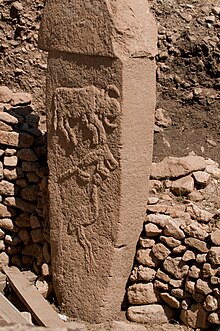
But is the "cradle of civilization" really the cradle of civilization?  There is evidence that civilization existed long before the time of the first recorded civilizations in the middle east.  One of the best examples is Gobekli Tepe.

The site of Gobekli Tepe was discovered in 1963 but was not excavated until that 1990's.  Massive stone monuments with elaborate carvings of animals have been found at the site and dated to being at least 10,000 years old.


There is no written record of what the purpose of the site was, who built the site, or how they built the site.  But it was obviously built by skilled engineers and at some point appears to have been deliberately buried thousands of years before the rise of civilization in the fertile crescent.  It is thought only a small percentage of the site has even been excavated, but what they have found so far is proof enough that civilization existed thousands of years before the earliest recorded civilizations in the fertile crescent.


In 2001, it was announced the ruins of an ancient city were found underwater in the Gulf of Khambat in India.  The civilization found there was dated to being 9500 years old.  Whoever built the city obviously built it when the land it is own was above ground.  It is my feeling that there could be many civilizations that existed thousands of years ago prior to the Great Flood (or the end of the ice age) that are now underwater.  The ruins in Gulf of Khambat are just one example.  I elaborate more on my thoughts about lost civilizations and underwater archaeology here.

My feeling is that we need to be more open minded about our prehistoric history.  These are but two examples of prehistoric ingenuity (see more here).  While I am not a dogmatic creationist who believes the world is only 6000 years old, I also do not simply accept "scientific" dogmas about prehistory as fact.  I'm comfortable with my worldview being viscous and shaped by what is discovered instead of just being set in stone.  I don't try to make new discoveries fit into some long held beliefs.  If a new discovery fits with what is known historically, great.  But if it doesn't, then maybe it is time to rethink that part of history.  If a new discovery can rewrite when a dinosaur lived, then new discoveries should be able to rewrite how old civilization is.  And the discoveries at Gobekli Tepe and the Gulf of Khambat are evidence that human civilization existed thousands of years prior to the records of civilization that we have.

Saturday, January 26, 2013

Atlanteans in America?

Is it possible people from Atlantis visited prehistoric America?  That probably depends on what your view of who the Atlantean people were.  If you take the more traditional view of the Atlantean legend, which places Atlantis as a now lost continent in the Atlantic ocean over 10,000 years ago, then it is hard to say, because if that is true, we don't have any of their records or a conclusive archaeological record either.

However, if you consider the possibility that the Atlantean civilization that Plato wrote about was actually a civilization that existed more recently than that, then there is evidence that it may be possible -- perhaps even likely -- that Atlanteans did visit prehistoric America.

So who am I actually talking about?  The Minoans.  The Minoans were a prehistoric bronze age culture that lived on Crete.  They were remarkably advanced for an early bronze age culture.  They had sophisticated architecture that included hot and cold running water as well as sophisticated art and culture.  The legend of Atlantis says it was destroyed by being submerged by water.  And like the legend of Atlantis, the Minoans were likely wiped out by a tsunami after the volcano Thera erupted around 1600 BC.  Not only does the Minoan civilization match Plato's description of Atlantis well, I think it is important to note that we don't actually know what the Minoans called themselves.  The term "Minoan" was coined by archaeologist Arthur Evans after the mythic King Minos.  So in ancient times, they would have probably been called something else.  I think the evidence suggests they were called Atlanteans.  This isn't just a theory I came up with own my own either.  Some archaeologists now believe that the people we call the Minoans were actually the Atlanteans.

So what's this about Atlanteans in America?  If they lived in Crete, how would they have gotten to America?  Well, they were a seafaring culture known to travel the Mediterranean Sea as far as Spain.  But what if there was evidence that they actually traveled much further than that?  There may be evidence that they mined copper on Isle Royale in Lake Superior.

Isle Royale was once home to some of the world's largest copper deposits.  But sometime prior to Columbus coming to America, much of the Great Lakes copper disappeared.  Native Americans were known to use copper, but it is said that there was once billions of pounds of copper in the area, yet no one has found anything approaching that much copper in Native American artifacts.  So where did it go?  According to Scott Wolter of the H2 show America Unearthed, the Minoans must have mined it.

In the first episode of the series, he presents the evidence he has found that Minoans may have visited prehistoric America and mined copper in Lake Superior, which he thinks may have been the copper that actually fueled the bronze age (bronze is made by combining copper and tin).  Although copper can be found in Europe, it has been questioned if there was ever enough in Europe to accommodate the massive amounts used during the bronze age.

The Newberry tablet is a tablet that appears to be ancient in origin and was found in Newberry, Michigan in 1896.  The script on the tablet appears to be written in Minoan script.  It is unlikely the the tablet is faked because it was actually found before the Minoan civilization was discovered in 1900.  To take the investigation a step further, Wolter had the purity of Michigan copper tested to see if it matched the purity of the copper found in a Minoan shipwreck.  It matched.

This revelation doesn't just rewrite the history of America.  His findings not only show that ancient Europeans may have visited America, but it also lends more credence to the theory that the Minoans were actually Atlanteans.  If the Minoans were capable of crossing the Atlantic in the prehistoric bronze age, then they must have been a very advanced civilization -- perhaps advanced enough to match Plato's description of Atlantis.

-----------

View the Great Lakes Copper heist episode of America Unearthed below.


H2 Episode Link

Thursday, January 17, 2013

What if time travelers from the future actually came from the past?

Time travel has long been a staple of the science fiction genre.  But the traditional view of time travel from the science fiction perspective seems rather far-fetched.  I try to be open-minded about things, but it just seems unlikely to me that someone could develop a machine that has a dial they could turn that would physically take them to another time period.  Even if someone did somehow develop a machine that could physically take them to another time period, there are so many potential time travel paradoxes out there that I still don't see how it would ever work.

Time Dilation

On the other hand, there may be another kind of time travel that actually fits in with modern physics -- time dilation.  In the theory of relativity, time dilation is an actual difference of elapsed time between two events as measured by observers either moving relative to each other or differently situated from gravitational masses.  Here's an excerpt of the Wikipedia entry on the subject:

An accurate clock at rest with respect to one observer may be measured to tick at a different rate when compared to a second observer's own equally accurate clocks. This effect arises neither from technical aspects of the clocks nor from the fact that signals need time to propagate, but from the nature of spacetime itself.

It goes on to provide a more specific example:

A case of time dilation in action is that astronauts return from missions on the International Space Station (ISS) having aged less than the mission control crew that remained on Earth. Such time dilation has been repeatedly demonstrated (see experimental confirmation below), for instance by small disparities in atomic clocks on Earth and in space, even though both clocks work perfectly (it is not a mechanical malfunction). The laws of nature are such that time itself (i.e. spacetime) will bend due to differences in either gravity or velocity—each of which affects time in different ways. 
In theory, and to make a clearer example, time dilation could affect planned meetings for astronauts with advanced technologies and greater travel speeds. The astronauts would have to set their clocks to count exactly 80 years, whereas mission control—back on Earth—might need to count 81 years. The astronauts would return to Earth, after their mission, having aged one year less than the people staying on Earth. What is more, the local experience of time passing never actually changes for anyone. In other words, the astronauts on the ship as well as the mission control crew on Earth each feel normal, despite the effects of time dilation (ie. to the traveling party, those stationary are living "faster"; whilst to those stood still, their counterparts in motion live "slower" at any given moment). 
With technology limiting the velocities of astronauts, these differences are minuscule: after 6 months on the ISS, the astronaut crew has indeed aged less than those on Earth, but only by about 0.007 seconds (nowhere near the 1 year disparity from the theoretical example). The effects would be greater if the astronauts were traveling nearer to the speed of light (approximately 300,000 km/s), instead of their actual speed—which is the speed of the orbiting ISS, about 7.7 km/s. 
Time dilation is caused by differences in either gravity or relative velocity. Both factors are at play in the case of ISS astronauts (and are actually opposing one another). 

So in other words, if astronauts left earth and traveled far enough away at a fast enough speed, when they returned, more time would have elapsed on Earth than had elapsed for them on their spacecraft...although it wouldn't seem like more time had passed to them.

Now let's move on here.

Lost Civilization

If you've read my blog for a while, you probably know that I'm interested in the topics of lost civilization and the possibility of lost advanced prehistoric civilizations.  I've written about or mentioned the topics in various posts from the past.  Here's links to some of those posts if you haven't read them before and would like to:

Forgotten Civilization: The Science of Questioning or the Questioning of Science?

Did the 'gods' forget how to be 'gods'?

Civilization Lost Documentary

So to sum up here, I like to consider the possibility that there were once advanced civilizations on Earth that have long since been gone...possibly highly scientifically advanced civilizations.

Now let's put these two topics together.

Time Dilation plus Lost Civilization

There's a theory in the UFO research community that has been tossed around before that suggests that (some) UFOs may not be aliens from another planet, but time travelers from the future.  But what if they were actually "time travelers" from the past?  Lets say for a moment that there was once a highly advanced scientific civilization that existed in the distant prehistoric past of the Earth.  Let's say they developed space travel and the ability to fly near, maybe even exceed, the speed of light.  Taking time dilation into consideration, if prehistoric astronauts left Earth sometime in the distant past and traveled far enough away at a certain speed, is it possible that they would return to Earth at a much later time than they left?  I'm not a physicist and math is not my best subject, but lets say some prehistoric astronauts left Earth to embark on a mission that would take them away for several years.  Is there a distance they can travel and speed (theoretical or not) that they could travel at that would have them returning to Earth several hundred or even several thousand or several 10s of thousands of years later on Earth?  I don't know what that speed or distance would have to be, but if the theory of relativity is accurate, then I would assume it must at least be theoretically possible.

So if prehistoric astronauts left Earth for a few years and when they returned a few thousand years had passed on Earth, they might find the civilization they left was gone and new civilization had developed that may have seemed both foreign and primitive to them.  The question then would be did they know they would be returning to Earth thousands of years after they left?  Did they understand time dilation?  For that matter, do we really even understand time dilation?  If they did understand time dilation and our understanding of it is accurate, then why would they leave knowing they wouldn't return for thousands of years?   Since I'm only speculating here, I can think of a few possibilities.

-They knew they wouldn't return for thousands of years and knew they would be leaving their old lives behind, but chose to do so anyway either because they wanted the adventure or they wanted to learn more about the universe.

-They were expecting some catastrophic event and wanted to avoid it by leaving Earth and returning after the event had long been over.

-They didn't actually plan to be gone that long, but ran into a problem that delayed their return.

Maybe you can think of some other possibilities.

So what would the world they returned to be like?  That all depends on what year it is when they returned.  Maybe there were multiple teams of astronauts leaving on multiple missions that would have them returning at different times.  If so, then various UFO sightings throughout history may have been prehistoric astronauts returning to Earth.  If they are human, then it would be easy enough for them to blend in with the populace.  Except the world they returned to would probably seem foreign to them and they wouldn't understand the language.  So even though they may be able to fit in by their appearance, they might not understand the customs or know how to communicate effectively.  Because of that, they may avoid making direct contact.  On the other hand, maybe they would contact the people and set themselves up as 'gods'.  It could be that prehistoric astronauts returning at different time periods may handle their situation differently.  Even if two teams left around the same time, if their missions were different lengths, one team may end up returning many years after the other team returned.  So with no way to contact others from their time period anymore, they may have no choice but to do whatever they see fit.  Perhaps some would choose to avoid contact, perhaps others would choose to rule over the more primitive people they returned to find.  Maybe others would just say screw this and leave again.

Concluding Thoughts

While time dilation may not be quite as cool as driving a Delorian at 88 miles to travel through time, it is something that is based in actual science and not science-fiction.  The idea that some UFOs may be time travelers from the past is, of course, based on the possibility that advanced scientific civilizations may have existed in the distant prehistoric past, which is a debatable topic.  Mainstream academia doesn't typically consider such a possibility, and even though I do feel that advanced prehistoric civilizations probably once existed, even I doubt they had advanced space travel.  But I do like to consider possibilities.  So what if time travelers actually came from the past instead of the future?

Monday, December 10, 2012

Civilization Lost Documentary

I watched a DVRed documentary last night called Civilization Lost on H2 (History Channel 2) that I thought was excellent and fit in well with my recent post Did the 'gods' forget how to be 'gods'?

It covers lost civilization locations such as the 11,000 year old  Gobekli Tepe site in Turkey (which I mentioned in my post Prehistoric Sophistication) and Knossos, which I feel may have once been a part of -- and possibly the capital of -- Atlantis.

More than that, it also goes into what could possibly cause the demise of once great civilizations that have been lost to time and become the things of legends.  It cites examples of modern disasters such as the 2011 Japanese earthquake and tsunami that caused massive devastation and showed how mother nature can inflict destruction swiftly.  Asteroids and climate change are considered as well.

It also questions whether entire civilizations can essentially be erased and forgotten by such disasters and if it's possible our own modern civilization could be erased in a similar fashion.

Definitely a good watch if your interested in the topic of lost civilizations or ancient and prehistoric history in general.  You can watch the documentary below or get it from the History channel's website here.  It's about an hour and half, so if you want to watch it and don't have time now, you can just click the little "watch later" clock button in the video on the bottom right and go back to it another time (this is especially useful if you have a way to watch it on your television, such as with the YouTube app on an Xbox 360).


Wednesday, December 5, 2012

Did the 'gods' forget how to be 'gods'?

I was listening to the latest episode of the Paranormal Podcast, where Jim Harold interviews Dr. Rita Louise about ancient aliens, and I began to think about my preferred explanation for who the ancient pagan 'gods' were -- humans from a lost advance civilization.  I've written about this idea before in my post Give our ancestors more credit, but after listening to the Paranormal Podcast today, I started thinking more about what might have happened to the pagan 'gods'.

Questions raised on the Ancient Aliens TV show about the ancient astronaut hypothesis include where did they (the aliens) go and will they return?  And those are good questions to consider if you follow the ancient astronaut hypothesis.  All you can really do is speculate as to where they went and if they will come back.  Other questions to consider are why did they leave in the first place?  And if they are coming back, why have they been gone so long?

I feel these questions are more easily answered by replacing the aliens from space with humans from Earth.  Like I said before in the post I mentioned above, the so-called 'gods' may have just been a prehistoric class of aristocrats.  Maybe we can take it a step further and consider the possibility that these prehistoric aristocrats were the remnant of a highly advance civilization that existed prior to some sort of prehistoric cataclysm.  Perhaps it was a civilization with technologies similar to what we have today.  Maybe they had cars, flying machines, and laser technologies.  Dr. Louise speculated that when 'gods' smote people with lightning, maybe they were using laser weapons and the people just called it lightning.  What if that were true....except it wasn't aliens but advanced humans instead?

It's easy to replace ancient aliens with advanced prehistoric humans, but what about the questions I mentioned above?  Where did the 'gods' go?  Will they return?

If the ancient pagan 'gods' were the remnant of a highly advanced prehistoric civilization, they may have been able to attain the position of 'god' in a post-apocalyptic society by saving or scavenging technologies from the time before the cataclysm.  They may have impressed less developed populations with flying machines and charm, or scared them into obedience by threatening them with their advanced weapons...possibly some kind of laser weapons.  The problem for the 'gods' would come when they could no longer maintain their old technologies.

Let's take a look at our technologies today.  If you are reading this, then you must know how to operate a computer or tablet or smartphone.  But if you survived some sort of massive cataclysm on the Earth, would you know how to build a computer from scratch?  If, by chance, you just so happen to be a computer hardware engineer, do you know where you would get the parts to build one from scratch?  And if you do, do you also know how to program the software for it too?  You can probably see where I'm going with this.  You may know how to use a computer, but can you build one?  You may know how to drive a car, but can you build one?  You may know how to fly a plane, but can you design and manufacture one?  Not everyone has the same skill set.  Not everyone has the same level of education.

Now let's go back to the possibility of an advanced prehistoric civilization remnant living in a prehistoric post-apocalyptic world.  Perhaps a prehistoric pilot flew his flying machine somewhere and was able to impress some people with his fancy gadgets or maybe they feared his laser.  Maybe those people would begin to worship and serve him.  Maybe his knowledge gave him leverage and he didn't want to pass it along because he liked being worshiped and served.  Maybe being served was as close as he could get to a life of luxury he had had before.  Or maybe his life wasn't all that luxurious in the first place, and he saw his technology as an opportunity to have the life he couldn't have before.  It's also possible that the first generation of people living after the prehistoric cataclysm understood that he wasn't actually a 'god', but a leader.  Later generations may have perpetuated a myth that he was a 'god' because they were so far removed from the time before the cataclysm that they had no recollection of the way things were or they technologies that had existed.

The problem would come for this 'god' when he could no longer maintain his old technologies.  Maybe he had some mechanical knowledge and was able to MacGuyver some repairs for a while, but eventually the engine would probably fail and he may not have known how to build another one.  His days of flying would be over.  As for his laser, maybe he no longer had the appropriate power source to charge it.  After a few generations, no one would even have any memory of the old world and without proper maintenance, the technologies of the old world would no longer work.

So where did the 'gods' go?  They simply died.  Let's take a look at Greek mythology for a possible example.  Cronus was the original leader of the gods of Greek mythology.  He was eventually overthrown by his son Zeus.  What if Cronus was actually from an advanced prehistoric civilization?  Maybe he flew to ancient Greece and was worshiped by the ancient Greeks already living there.  His son Zeus may have been able to maintain the old technologies for a while, but would the next generation still know how to do that?  What if there were no engineers?  Is this why there were no more generations of 'gods' after the Olympians?  Did the 'gods' simply die off, and with no more technologies, their offspring eventually just merged with the rest of the society, only to be replaced by a preisthood that claimed to have a continued connection with them?  Is this why the 'gods' also had children with 'mortals'?  Did the 'gods' and 'mortals' merge together after that because the 'god' families no longer knew how to build the technologies of their ancestors?  Did they forget how to be 'gods'?

So, if the 'gods' were real humans, will they ever return?  Maybe the question should be, have they already returned and no one has noticed?  Obviously the original 'god's won't be returning if they were human and are now dead, but have we built what they lost?  The technologies that are attributed to ancient aliens such as space ships and lasers are things we have today in one form or another.  Granted, we don't have long distance space craft capable of carrying people to other star systems, but if the 'gods' were actually prehistoric humans, maybe they didn't either.  Maybe they just had flying machines capable of flying in the atmosphere, and those without flying machines just saw them as magical people coming from the sky.  Maybe they never really came from space at all.  Maybe we now have all that they ever had...or more.  With that in mind, could the 'gods' have returned in us?


Tuesday, October 16, 2012

Give our ancestors more credit


I was listening to an episode of Jim Harold's Paranormal Podcast titled Ancient Aliens Debunked, and it got me thinking about the whole ancient astronaut theory again.  In the podcast, Jim interviews Chris White about his documentary titled Ancient Aliens Debunked.  I didn't feel the need to watch the whole documentary because I don't put a lot of stock in the ancient astronaut theory in the first place.  I'm not completely closed minded to the possibility of ancient aliens visiting earth, but a lot of theories put forward on the TV show Ancient Aliens are just silly to me.  My main interest in the show is the ancient anomalies they present, not their analysis of them.

So what is an alternative theory to explain the mysteries presented in Ancient Aliens?  You can simply replace the aliens with our ancestors.  I don't think we give our ancestors enough credit.

And I think part of the reason we don't give our ancestors enough credit is due to failure on the part of our academic establishment to properly interpret our early ancient and prehistoric history.  The modern academic establishment is controlled by an atheistic paradigm that believes evolution explains the history of the world and because of that, the idea that advanced civilizations existed in prehistoric times just doesn't fit into their interpretation of history.  So they end up ignoring things that don't fit with their worldview or attempting to explain them away in someway that does fit it.  And what happens when that happens?  The ancient mysteries don't get explained, so theories like the ancient astronaut theory develop to fill the void.

But it need not be so overly complex.  We don't need aliens to explain the mysteries, we just need to realize our prehistoric history isn't a cut and dry story of progression from primitive hunter gatherers to the jet flying, car driving, computer using people we are today.  You can see the history of civilization in the world today...not everyone is like us.  There are still people living in small, simple farming communities as well as people who live in tribal communities.  If you were writing a book about modern society, you wouldn't base your whole book on people living in the Congo or Amazon jungle.  And I don't think our history books should be solely based around the idea that all prehistoric people lived in primitive tribal communities.  I think the world before the flood (or before the last ice age, for any of you who don't want to believe the hundreds of flood stories from around the world) may have been a very different place than what we have been taught in school.  I think that some of those prehistoric civilizations may be underwater now (I've written about that in more detail here).  There is a lot of evidence of prehistoric sophistication, and none of the ancient anomalies presented in Ancient Aliens is all that mysterious if you consider that some people in the prehistoric past were actually very advanced.  We didn't need aliens to teach us how to develop our modern technologies (although some people may think that is debatable), so maybe prehistoric people didn't need aliens either.

The so-called 'gods' of the ancients were probably just humans.  It's possible the mythologies were just fiction, but I think it is more likely that they were based on real people (I've written about that here).  The 'gods' were probably just a prehistoric nobility, or an ancient class of the "1%".  Maybe they had advanced technologies that they used to their advantage to set themselves up over everyone else.  Their technology may have seemed magical to those that didn't understand it.  If the people of the cargo cults of World War II thought that they could gain the material wealth of the advanced people (the Allies) by creating religious rituals, who's to say an advanced prehistoric culture couldn't have had the same effect on a primitive prehistoric culture?  The Allies, who were dropping off supplies on Pacific islands, were not even trying to portray themselves as gods....imagine if they had actually tried to convince the islanders they were some kind of gods!

Eventually these prehistoric aristocrats gave way to ancient priesthoods who claimed to have a connection with the prehistoric aristocrats, or 'gods'.  If I am correct in that the 'gods' were actually real people, then the original 'gods' probably just died and later people created a priesthood that claimed to have a continued connection with the 'gods' and maintained their power through charisma, fear, parlor tricks, or any combination of the three.  From that point on, we have written accounts of history that we can track fairly accurately.

Napoleon Bonaparte said "history is a set of lies people have agreed upon."  I think Napoleon was being overly cynical in that statement, but it is true that history is a matter of perspective.  It's often been said that history is told by the winners.  That I can agree with.  Today we have the cliche that "one man's terrorist is another man's freedom fighter."  And in the political world, various subjects are debated every day.  It's all a matter of perspective.  If we can't even agree on our current events today, then why should we act as though history is all agreed upon?  The history we are taught is just someone's perspective of it.  Even with contemporary historical accounts, you are only getting the perspective of the writer.  Modern writers of history are merely basing their version of events on whatever evidence they can find about a period of time that they themselves didn't even live through.  We shouldn't assume they know the whole story.

So am I right about this?  I don't know, I'm only speculating.  I'm not completely closed minded to the possibility of ancient astronauts, but I do think it's unlikely.  I also think it's possible the 'gods' were purely fictitious creations by ancient priesthoods.  But I do think when you consider all the ancient anomalies out there, the mysteries are better explained when you consider the possibility that they were built or designed by people of an advanced prehistoric civilization.   It was all a very long time ago though, and I really don't know the answer, but I am free to speculate.  And I suppose that's probably why I am a blogger instead of a professor.  I like to consider the possibilities and don't want to feel as though I have to mold my view of history to fit into someone else's established curriculum.  I'd like to know all the answers, but I'm fairly content just keeping an open mind to the possibilities.

King Solomon said there is nothing new under the sun.  Perhaps that was more true than even he imagined.  And maybe it is more true than even we have imagined.

Sunday, June 24, 2012

The Baltic Sea Mystery: UFO or Lost civilization?

Artist interpretation. Image by Vaghauk


A mystery object that was spotted on sonar in 2011 at the bottom of the Baltic sea has been in the news recently after divers investigated the anomaly up close.  The anomaly has been referred to as a UFO, even by the mainstream media, due to it being somewhat disc shaped and bearing a resemblance to the Millennium Falcon from Star Wars.

Millenium Falcon
However, now that divers have seen it up close, they have found it doesn't look spaceship, but it is still mysterious.  It appears to be made of stone, which wouldn't be what we would expect a spaceship to be made out of.  Maybe we shouldn't assume a spaceship could't be made of stone, but I would think something less porous would be more suitable.  But that doesn't mean the formation isn't unusual.  Here are some things that have been noticed about it:
  • The central part of the object has an egg shaped opening that leads inside of it.
  • There's no silt on the rock.
  • It's covered in soot.  Stone doesn't normally burn.
  • A 300-400 meter trail or "runway" leads away from it, giving it the appearance of having skid marks.
  • An 8 meter pillar as well as stone circle formations described as looking like small fireplaces have been found.
  • It has rounded sides, as well as what appears to be construction lines and boxes drawn on it.  It also has rugged edges and straight edges.
So that does sound pretty mysterious.  But does it really sound like a UFO?  Or could it be evidence of a lost civilization that has been submerged?  Some type of temple or public building perhaps?  Lets consider some of the oddities that have been noted about it.  

An egg shaped opening doesn't really indicate much besides the fact that it's an opening.  It's hardly any conclusive evidence of it being the opening to a spacecraft.  Small fireplaces would explain why there is soot on it, and if it was a structure built by men long ago, then fireplaces wouldn't be unusual (especially in such a cold environment) and it would make sense that they are there (and why would a spaceship have fireplaces on the exterior anyway?).  The "runway" may just be some type of road or path constructed for people to get to the building or monument.  

It's also reported that it looks like the kind of stone seen by divers in keys and harbors -- one that seems to originate from before the ice age.  I've written about the possibility of finding submerged lost civilizations along where the coastlines would have been during the last ice age in my post Forgotten Civilization: The Science of Questioning or the Questioning of Science?.  The exact coordinates of the object have not been released (at least not as of this writing), but it is said to be at the bottom of the Botnia Gulf.  So could this be evidence of a forgotten civilization along where an ice age coastline may have been?  Could it be man-made, or possibly a natural formation that men carved into a structure and settlement of their own?  If it's not a completely natural formation, then it would seem more likely to me that it is probably a man-made structure and not a crashed UFO.

Although, even if it was proven to be a man-made structure, I wouldn't be surprised if there was an episode of Ancient Aliens where Giorgio Tsoukalos questions whether or not ancient people were building a structure similar to something they had seen in the sky.  :)

See more on Know Your Meme

News Links:
Fox News

Saturday, June 2, 2012

More evidence the Giza pyramids were built around 10,500 BC?

The Orion correlation theory suggests that the pyramids at Giza may have been built around 10,500 BC.  Basically the idea is that the three big pyramids at Giza match up to Orion's belt in the sky, and the timeframe is based on the location of the monuments being at the spot where the constellations would have risen on the spring equinox during the age of leo.

But I came across a video today that claims to have found evidence of a 10,500 year old date inside the Great Pyramid too.  Etchings that are supposedly a star map from that time period.  I can't vouch for the accuracy of the research, but it's an interesting piece if the subject of pyramid dating interests you.


Sunday, July 31, 2011

Ancient Aliens and The Mysterious Origins of Man

I've had mixed feelings about the History channel show Ancient Aliens over the course of its run.  When the original special aired a couple of years ago, I thought it was interesting and presented the information well.  I'm not a believer of the ancient astronaut hypothesis it presented, but I'm open to the possibility (at least certain aspects of it).  So when they decided to turn it into a series, I figured I would give it a shot.  After watching a couple of episodes though, I lost interest.  I thought they were just getting silly about it, seemingly assuming aliens had something to do with almost any ancient mystery.  Although inspired by writers like Zecharia Sitchin and Erich von Daniken, ultimately, all they are doing is inserting science fiction concepts that have been developed primarily over the last 60-70 years into history.

But I did catch some second season episodes that sounded like they might be interesting when I didn't see anything better on.  My impression of the show didn't change much, but I did realize that the information they were presenting was interesting, even if their analysis of it could be a bit silly at times.  So I've decided to watch the third season just to see what they bring up.  I figure whatever they bring up will be interesting, even if I don't agree with their theories.

On the other hand, I was surfing around on Youtube today and came across a video called The Mysterious Origins of Man.  It was obviously pretty old since Charlton Heston was the presenter (from 1996, according to Wikpedia), so there isn't any new information in it, but I thought the information was presented well.  It covers topics such as out of place artifacts, Tiahuanaco, and ancient Egypt.  If you're interested check it out below.


Here is a shortened version of that video: http://youtu.be/nne_-j08yMo

Sunday, October 25, 2009

Finding Atlantis...again and again and again...

Ahh...Atlantis.  Plato wrote about the advanced lost civilization of Atlantis.  Edgar Cayce filled us in on some more details about it.  Some people say it never existed and is totally a myth.  Other people think it did exist.  There are some that are not only convinced that it existed, they've seemingly created myths..err..'theories' of their own about it.

There's been numerous occasions that someone has claimed to have found Atlantis.  Ironically, despite the two most commonly cited sources claiming that Atlantis was in the Atlantic Ocean, people have claimed to have found it all over the world.  Here are some of the places people have claimed was Atlantis:

  • The Azores - The Azores are isolated islands found in the Atlantic Ocean.  So the location seems to be right based on our two primary sources of information, but that's about all that seems right about it.  Some people think the Azores are the tops of mountains from Atlantis, but this is just speculation.  When the Portuguese discovered the islands, there were no indications that they had been inhabited.
  • The Canary Islands - These islands are also in the Atlantic, and the Spaniards did find people there when they arrived.  The early inhabitants of the Canary Islands had brown complexions with blue eyes and blondish hair.  Some people think they may have been related to the Berber people of Northern Africa.  There is nothing particularly 'Atlantean' about the Canary islands though.
  • The Caribbean - Edgar Cayce readings have contributed to this interpretation.  Being in the Atlantic, it does appear to have the appropriate location.  However, the Caribbean is generally thought to either be the outer edges of Atlantis, or the remnant of a post-Atlantean civilization after the deluge.  It's been said that Atlantis was originally a very large land mass known as Poseid, and later crumbled into a smaller set of islands known as Poseidia, Aryaz, and Og.  Presumably, the final destruction that Plato alluded to was the destruction of those three principle islands of Atlantis.  So it may be possible that the Caribbean is the outer edge of one of those islands.  Nevertheless, these stories are primarily based on Edgar Cayce readings, and there isn't much physical evidence to support these stories besides a possible connection with the so called 'Bimini Road'.  There could be more evidence, but not many people seem to be to interested in putting much effort into finding more evidence.
  • The South China Sea - Atlan.org claims that Atlantis is in the South China Sea.  Not only that, they claim to have found the Garden of Eden, the Island of Avalon,  and several other places there.  Of course, the most obvious problem with these claims is they are all out of place.  The South China Sea is not part of the Atlantic.  Nor is it near the Euphrates, Tigris, Pison, and Gihon rivers.  And I just don't think Avalon is in the South China Sea either.  Just because you can find similarities between a description of one place and another place, doesn't mean they are the same place.  If I describe a big city with tall buildings by the sea, I could be describing New York, or I could be describing Hong Kong.  The description sounds similar, but obviously they aren't the same place.
  • Santorini - Some people think the ruins of the Minoan civilization at an excavation site known as Akrotiri on Santorini is Atlantis.  Typically, this is often considered to be the 'inspiration' for the Atlantis 'myth'.  Indeed, many similarities have been found between Akrotiri and what Plato described as Atlantis.  The volcanic eruption at Thera is thought to have been the destruction of Atlantis that Plato alluded to.  However, we still have the problem of location.  Santorini is not beyond the 'Pillars of Hercules' as Plato described.
  • Sardinia - Italian journalist Sergio Frau wrote a book theorizing that Sardinia was Atlantis.  He attempted to explain the location problem away by claiming that the Pillars of Hercules were at Sicily, instead of the Straits of Gibraltar.  
  • Antarctica - Some have said that Antarctica is Atlantis, speculating that at some point in history, Antarctica was closer to the equator.  At some point, due the earth's shifting crust, Antarctica wound up at the south pole and froze over.  Professor Charles Hapgood of Keene College in New Hampshire pointed out that there are ancient charts that allegedly show the Antarctic landmass as it was before it was covered by ice.  Ancient charts that allegedly show what the landmass of Antarctica looked like before it was discovered (rediscovered?) in the early 19th century is a bit of a mystery in itself, but it's not proof that Antarctica is Atlantis.  
People have also claimed to have found Atlantis in places such as South America, Turkey, Cyprus, and in just about every other corner of the world.  The latest example I have come across is a sunken civilization off the coast of Greece.  The sunken civilization is said to be 5000 years old.  Here is an excerpt from an article about it:
The secrets of a lost city that may have inspired one of the world's most enduring myths – the fable of Atlantis – have been brought to light from beneath the waters off southern Greece.
Explored by an Anglo-Greek team of archaeologists and marine geologists and known as Pavlopetri, the sunken settlement dates back some 5,000 years to the time of Homer's heroes and in terms of size and wealth of detail is unprecedented, experts say.
"There is now no doubt that this is the oldest submerged town in the world," said Dr Jon Henderson, associate professor of underwater archaeology at the University of Nottingham. "It has remains dating from 2800 to 1200 BC, long before the glory days of classical Greece. There are older sunken sites in the world but none can be considered to be planned towns such as this, which is why it is unique."
Read the rest here.

It seems to me when discoveries such as this are made, there are two main schools of thought.  One school says it's Atlantis.  The other school says its the inspiration for the Atlantis 'myth'.  My question is, why do people have to keep labeling underwater ruins as Atlantis?  In a previous post titled Forgotten Civilization, I pointed out that there are probably a lot of prehistoric cities submerged because they were flooded when ice started melting at the end of the last ice age.  But that doesn't mean that every submerged city is Atlantis or the inspiration of the Atlantis 'myth'.  To put it into perspective, imagine if the Americas, Europe, and Asia sunk tomorrow.  Thousands of years from now, people may talk about an advanced lost civilization of 'America'.  But if somebody found London underwater, would they claim it was America?  Would they claim Moscow is America?  Beijing is America?  Would they assume every submerged city they find is America?

Although it may be somewhat ironic, I think the scientific establishment is the biggest roadblock to discoveries of submerged civilizations.  Finding advanced cities that are many thousands of years old conflicts with the Darwinist mythology that they have been trying to dictate to us for decades now.  It just doesn't fit into their timeline of prehistory.  Oftentimes, they ignore the possibility of finding the ruins of advanced cities underwater, or they make excuses that downplay the significances of the ones that are found.  In general, the scientific establishment doesn't seem to have much interest in even looking for submerged cities.  I suppose by not bothering to look, they don't have to worry about finding evidence that proves them wrong.

Sometimes when civilizations are found in the Pacific area, it's said to be a remnant of Mu (a.k.a. Lemuria).  The point I want to make here is that not every submerged civilization that is found is necessarily a part of Atlantis or Mu.  There's potentially a lot of submerged civilizations that are many thousands of years old.  While I think Atlantis (and possibly Mu) may have existed, we shouldn't jump to the conclusion that every submerged city we find is Atlantis or the inspiration for the Atlantis 'myth'.

Friday, October 2, 2009

Forgotten Civilization: The Science of Questioning or the Questioning of Science?

I'm inclined to believe that our prehistory is a lot more interesting than what the majority of scientists would have us believe. The problem is that archaeologists, paleontologists, and the like limit themselves to preconceived notions about prehistory, scientific dogmas, and of course, whatever will get them the most funding.

I bring this up because mainstream science refuses to study anything that might bring into question what scientists already believe about prehistory. It seems that any time a prehistoric anomaly is found, the scientific establishment is quick to explain it away as something mundane and forget about the whole thing or just ignore it. It's unfortunate that it is this way.

The reason I like researchers like Graham Hancock is because they dare to ask the questions that the scientific establishment want to ignore. Hancock himself is not a scientist but a journalist, but in many ways, I think he behaves more like a 'true' scientist than some of the scientists do. The biggest irony of this to me is that centuries ago, the religious establishment ostracized guys like Copernicus and Galileo for daring to suggest that the 'established fact' of the sun revolving around the Earth was false. Today, when someone brings up a new idea or suggests that the scientific establishment is wrong, the scientific establishment behaves similarly to the medieval religious establishment.

The best example of what I mean can be seen in Ben Stein's documentary Expelled: No Intelligence Allowed. Some people may watch that film and misinterpret the point it was trying to make. It's not just a film trying to prove the validity of Intelligent Design, it's a film about how the scientific establishment behaves when someone dares to suggest that what the scientific establishment believes is wrong. All of the scientists interviewed in the film were credentialed. But the ones that chose to say or write something that didn't fit with what was already 'established' either lost their funding or lost their jobs. One professor was even blacklisted and couldn't find a job teaching anywhere….all because she merely mentioned something about Intelligent Design during a cell biology class.

Intelligent Design was the topic of choice in Ben Stein's film, but scientific dogma isn't limited to just the theory of evolution. I was watching a film by Graham Hancock called Underworld yesterday that pointed out some underwater anomalies that archaeologists refuse to take serious. Archaeologists seem to be perfectly content ignoring these anomalies or explaining them away as some type of erosion and then just forgetting about the whole thing. Part of the problem is the lack of funding. But I think pride is probably a bigger part of the problem than the lack of funding. I think most of these tenured guys just don't want to find anything that may dispute what they have so proudly taught about prehistory for so many years. A lot of the younger guys are probably afraid to break away from what is 'established' for fear of being ostracized in the scientific community. I think another part of the problem is the theory of evolution. Simply put, the scientific establishment refuses to consider anything that may suggest advanced civilizations existed during prehistory because it doesn't fit with what they already believe about prehistory. Their research is dictated by their preconceived notions of what the prehistoric world was like. They already believe prehistoric man consisted of nothing more than hunter/gatherers, so they assume anything that suggests otherwise is wrong, misinterpreted, hoaxed, or some kind of odd looking erosion.

The irony here is that the scientific establishment knows there was an ice age thousands of years ago. With that in mind, isn't it ironic that the scientific establishment has no interest in underwater archaeology (typically, most underwater archaeology done today is in regards of old shipwrecks…not prehistoric civilizations)? Think about it. Most cities and civilizations of recorded history are built where? Near coastal regions and rivers. So isn't it likely that ice age civilizations would have been built near coastlines and rivers? After the ice began melting, those coastlines would have been flooded. So if the coastlines of the last ice age are now submerged, wouldn't the best place to look for ice age civilizations be underwater? Apparently the scientific establishment doesn't think so.

Here is a picture of part of the 'Bimini Road':


Mainstream science has said this is erosion. If it is erosion, then my first question is why is this erosion confined to this one spot? Why is it not a mile away in another direction? Why that spot? And how did it erode that way? For that matter, what do they expect it to look like in the future? Presumably, if it has eroded to look the way it does now over a period of time, then it must still be in the process of eroding. So what do they expect it to look like a 1000 years from now?

Here is some more 'erosion' from Yonaguni, off the coast of Japan:


I could ask the same questions about this that I asked about the Bimini Road.

These are just a couple of popular examples of archaeological anomalies found underwater. There are numerous others and Hancock cites some of them in his film. So again I ask the question – Wouldn't the best place to look for ice age civilizations be underwater? If so, why do mainstream scientists always try to explain away anomalous finds as something mundane like erosion? Are they afraid they might find something that will hurt their pride? Or do they just form a hypothesis based on their preconceived notions of prehistory?  Or is it just the lack of funding? I think it is probably a combination of all those factors.

Imagine if North America, Europe, Asia, and Australia sunk today. Thousands of years from now, would there be scientists who assume that all men living during the 21st century were tribal men living in hunter/gatherer societies? Would they formulate their entire interpretation of 'prehistory' on the ruins of tribal civilizations found in the Amazon and Congo? Would they stomp their feet and bang their fists on the table because someone dared to suggest that there may be ruins of advanced civilizations underwater? Would the ruins of New York City be called 'erosion'?

I'm not criticizing the scientific method here. I'm criticizing the scientific establishment. And I realize that preconceived notions are not limited to the scientific establishment. Many people have preconceived notions about something, and oftentimes, research – scientific or not – is inspired by the desire to confirm a preconceived notion. Sometime research forms a belief, sometimes beliefs form the research. But what irks me about the scientific establishment is that they try to portray the image of being objective and logical, yet they are not always as objective and logical as they claim to be.

Wouldn't the logical place to look for ice age civilizations be underwater where ice age coastlines used to be?

I have a notion to believe that prehistory is much more interesting than what mainstream science has portrayed it to be. J

Tuesday, June 16, 2009

Fire, Brimstone, and Bombs Oh My!

Last night I was watching a documentary on the National Geographic channel that was trying to figure out what caused green glass to form way out in the Sahara in Egypt. The scientists knew that intense heat causes sand to fuse into glass, but they weren't sure what could have caused so much heat on such a massive scale in ancient Egypt. They compared it to the mysterious Tunguska event of 1908, where 80 million trees were knocked over in an area covering about 830 square miles by some sort of shockwave. It's unknown what caused the shockwave, but a couple of the most popular theories are an asteroid exploding about 3-5 miles above the surface, or a small comet vaporizing in the atmosphere. Other theories include anti-matter reaction of some sort, a UFO crash, or an experiment gone wrong (or right?). Another interesting thing about the Tunguska event is that glowing skies were observed throughout Europe for several nights after the event. The explosion is estimated to have been 1000 times stronger the atom bomb that exploded at Hiroshima. Whatever it was...it was powerful.

But anyways, back to the green glass in Egypt. The scientists interviewed in the documentary seemed to have been fans of the exploding asteroid over Tunguska theory and attributed the green glass in the Sahara to an exploding asteroid too. There is no crater at either location, so if it was an asteroid, it had to have exploded in the air. Although the asteroid theory seems to be a plausible answer, I don't feel it answers all the questions. For one, I would think even if it exploded in the air, there would be some traces of it remaining to be found somewhere. And what caused it to explode? Typically asteroids just burn up in the atmosphere....so what kind of composition would an asteroid have to have to actually explode on a scale much greater than the atom bomb at Hiroshima?

The green glass is what I really found to be interesting though. Finding ancient green glass (the research into the source of the glass was inspired by green glass found in a piece of jewelry from King Tut's tomb) in Egypt reminded me of another place where green glass was found...except it wasn't formed in ancient times. It was created in New Mexico in 1945. It was created by the test of the first atomic bomb. The heat emitted from it was so intense, it fused the sand together into green glass. The glass covered an area around 600 yards wide. Interestingly though, the Egyptian glass covers an area thousands of times larger. All of this reminded me of an excerpt from a poem I had heard before:


"...a single projectile
Charged with all the power of the Universe.
An incandescent column of smoke and flame
As bright as the thousand suns
Rose in all its splendour...
a perpendicular explosion
with its billowing smoke clouds...
...the cloud of smoke
rising after its first explosion
formed into expanding round circles
like the opening of giant parasols...
..it was an unknown weapon,
An iron thunderbolt,
A gigantic messenger of death,
Which reduced to ashes
The entire race of the Vrishnis and the Andhakas.
...The corpses were so burned
As to be unrecognisable.
The hair and nails fell out;
Pottery broke without apparent cause,
And the birds turned white.
After a few hours
All foodstuffs were infected...
...to escape from this fire
The soldiers threw themselves in streams
To wash themselves and their equipment."

Although that sounds like a description of a nuclear explosion, its actually supposed to be a description of an event that occurred during an Indian war variously dated to have occurred from around 2800 years ago to around 8000 years ago, depending on who you ask. Those verses are said to come from the Hindu epic the Mahabharata (I've never actually read the Mahabharata myself though), which is one of the longest epics ever written...much longer than some of the more famous epics like the Illiad and the Odyssey. But, J. Robert Oppenheimer, one of the lead scientists on the Manhattan Project (that built the first atomic bomb), must have read it or at least read part of it, because he quoted it once when describing how he felt after the first atomic bomb was tested. He said:

"Now, I am become Death, the destroyer of worlds."


When the ancient towns of Mohenjo-Daro and Harappa in India were excavated, they were found to have come to a sudden and abrupt end. Many of the skeletons found there were said to be holding hands and unburied, indicating the demise of the towns and their people seemingly came instantly...possibly by some type of blast. I've often heard that the skeletons found in these locations were radioactive, by I haven't been able to find what I would consider to be a good source to corroborate those claims. If you do a google search for the topic, most the sources for radioactive skeletons that come up are websites claiming alien involvement or advanced people from Atlantis or something like that....so you have to wonder if those claims aren't just the claims of somebody's overactive imagination that have gotten repeated over and over. While I think Atlantis probably did exist, I don't think its people were dropping nukes in India. But Mohenjo-Daro and Harappa aren't the only places in India that supposedly had some sort of radioactive blast. I remembered an article I had saved years ago that had originally been printed in the World Island Review in 1992. The article described construction being halted on a housing development in an area that supposedly still had high levels of radiation. The validity of the article may be questionable, but I figured I would mention it anyways.

But Hindu epics and claims of radioactive skeletons aren't the only evidence of powerful explosions in the ancient past. In the book of Genesis in the Bible, we have the tale of the destruction of Sodom and Gomorrah. God destroyed these cities by raining fire and brimstone down on them. It's uncertain where the exact location of Sodom and Gomorrah was - they would have been in ruins already when Genesis was written - but the most likely locations are the ruins of what is now known as Bab Edh-Drah and Numeira. They were "cities of the plain" and seem to match the description we have of Sodom and Gomorrah...all the way down to their demise. The two ruined cities seemed to have met their fate at the same time. They had collapsed walls, walls tilted at 50 degree angles, debris, and skeletons that weren't buried. So whatever the fate of the two cities was, it seemed to have come instantly. Typically, the sudden destruction of a city can be attributed to an earthquake or volcanic eruption, but this doesn't appear to be the case with these cities. For one, there is no volcano in the area, so it certainly wasn't a volcanic eruption. The possibility of an earthquake can't necessarily be ruled out entirely, but the evidence doesn't necessarily indicate an earthquake either. There is evidence of incineration though. So the evidence seems to suggest that the cities may very well have had fire and brimstone rained down on them. It should also be pointed out that it is a very salty area...and in the Genesis story, Lot's wife was turned into a pillar of salt during the destruction of the cities.

While I wouldn't completely rule out the possibility of aliens being involved in ancient warfare that may have included massive explosions, I doubt that that is the case. I doubt the theory that it was Atlanteans even more. But what can't be denied is that heat intense enough to fuse sand into glass has occurred in the ancient past. We also know that a shockwave that leveled trees over an 830 mile radius occurred many years before an atomic bomb was ever built. And ancient texts have described events that sound like explosions from high in the air. So while man made nuclear bombs may not have come on the scene until the mid twentieth century...its apparent that some type of massive explosions had already happened long before the modern man made ones occurred..